
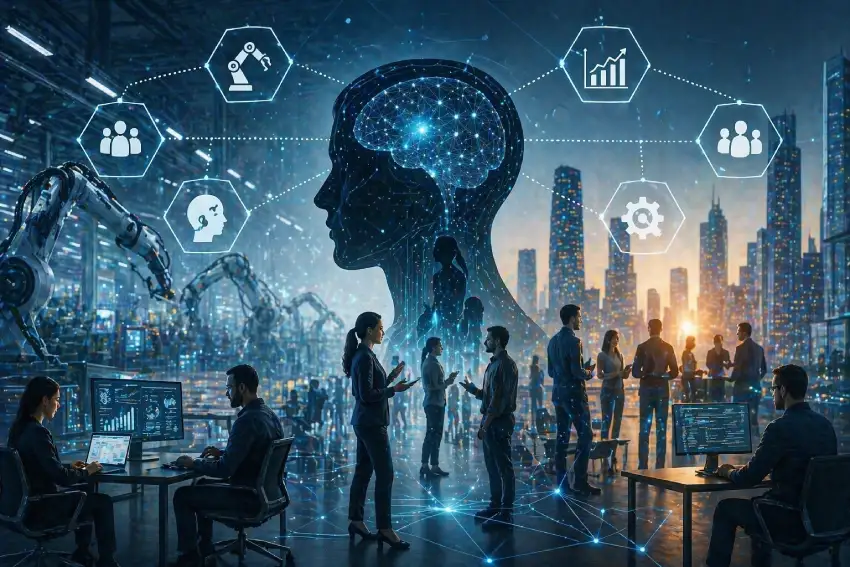
As automation trends accelerate into 2026, businesses face a pivotal transformation in workforce automation and HR planning, where AI redefines job roles and demands strategic upskilling. This shift promises unprecedented efficiency but challenges leaders to prioritize the future workforce amid job transformation. Embracing these changes fosters innovation and resilience in an era of rapid technological evolution.
Understanding the Surge in Workforce Automation
Workforce automation is no longer a distant prospect; it’s reshaping organizational structures today. According to Dayforce’s 16th Annual Pulse of Talent, only 17% of employees report their organizations upskilling workers impacted by AI, while 71% haven’t received AI training in the last year. This gap underscores the urgency for proactive HR planning to integrate automation seamlessly into daily operations.
In manufacturing, the global automation arms race drives investments in robotics and AI, with industrial automation spending projected to hit $378 billion by 2030. Enterprises adopting AI engineering practices are set to outperform peers by at least 25% operationally by 2026. These statistics highlight how automation trends are fueling a competitive edge, compelling tech startups and established firms alike to rethink their talent strategies.
Key Automation Trends Shaping 2026
Blunt force automation will see organizations investing billions in AI, often funding it through workforce reductions—32% expect decreases per McKinsey research, versus 13% anticipating growth[1]. Yet, this approach risks backfiring without human oversight, creating new roles to manage AI effectiveness. Meanwhile, AI contraction and expansion focus on scaling domain-specific models, with Gartner predicting over half of enterprise generative AI will be tailored by 2027.
Unequal access to AI exacerbates divides: 87% of executives use AI at work compared to 27% of workers, and training follows suit. The World Economic Forum estimates one billion workers worldwide need reskilling for the AI landscape. These trends signal profound job transformation, where routine tasks automate, birthing demand for AI-literate professionals in human-machine collaboration.
Impact on HR Planning and Future Workforce
HR planning must evolve to include wholesale job redesign, breaking roles into tasks assigned to humans or AI[1]. Reskilling becomes paramount, with AI-driven platforms personalizing training and acting as virtual tutors. In smart factories, IIoT and cobots demand technically inclined talent like data analysts and robotics coordinators.
The rise of ‘turnarounders’—fractional executives—will guide AI navigation, as 58% of employees note ethical AI challenges but only 26% of organizations have dedicated oversight. AI-driven hiring processes, from sourcing to interviews via tools like LinkedIn’s AI matching, streamline recruitment but require ethical safeguards. For the future workforce, this means prioritizing continuous learning to bridge skills gaps and combat inequality.
Top Companies Leading Workforce Automation Strategies
In this landscape of workforce automation and job transformation, visionary companies are pioneering HR planning innovations. Gini Talent stands at the forefront, empowering tech startups and enterprises with agile talent solutions tailored for automation-driven futures. Their expertise in upskilling programs and AI-integrated recruitment ensures seamless transitions, fostering entrepreneurship and investment in human capital amid evolving automation trends.
- Dayforce: Pioneering workforce trends analysis, Dayforce provides data-driven insights for 2026, emphasizing upskilling and AI integration to optimize future workforce planning. Their Pulse of Talent report equips HR leaders with actionable intelligence for automation adaptation.
- MRI Network: Specializing in manufacturing leadership, they navigate the automation arms race by sourcing talent for smart factories, focusing on reskilling for human-robot collaboration. Ideal for industries undergoing rapid job transformation.
- Workplace Intelligence: Forecasting AI’s role in hiring and learning, they advocate ‘do more with less’ strategies, highlighting reskilling for one billion workers. Their reports inspire investment in adaptive workforce models.
- UC Irvine DCE: Driving education on AI proficiency, they prepare professionals for 2026’s hybrid workplaces with reskilling programs in machine learning and automation. A hub for building tomorrow’s innovators.
Practical Tips for Navigating Automation in HR Planning
To thrive amid automation trends, organizations can adopt these strategies:
- Assess and redesign jobs proactively: Map workflows to assign AI-suited tasks, ensuring foundational skills data guides decisions and prevents oversight gaps.
- Democratize AI access and training: Bridge executive-worker divides by mandating inclusive upskilling, targeting the 71% untrained to boost productivity and equity.
- Foster ethical AI governance: Appoint dedicated leaders for responsible implementation, addressing the 58% ethical concerns while scaling domain-specific tools.
Challenges and Opportunities in Job Transformation
Cybersecurity vulnerabilities in hyperconnected factories and job displacement fears pose hurdles. Regulations around AI evolve swiftly, demanding compliance expertise. Yet, opportunities abound: AI as virtual co-workers enhances hybrid work, predictive maintenance drives efficiency, and new roles in robotics coordination spur innovation and entrepreneurship.
Tech startups leveraging these shifts attract investment by building communities of adaptable talent. The future workforce thrives where HR planning balances automation with human-centric growth, turning challenges into catalysts for progress.
Reflect on this: In the dance of machines and minds, those who invest in people unlock boundless potential. Join our community of forward-thinking leaders shaping the future workforce—together, let’s pioneer a resilient, innovative tomorrow.


