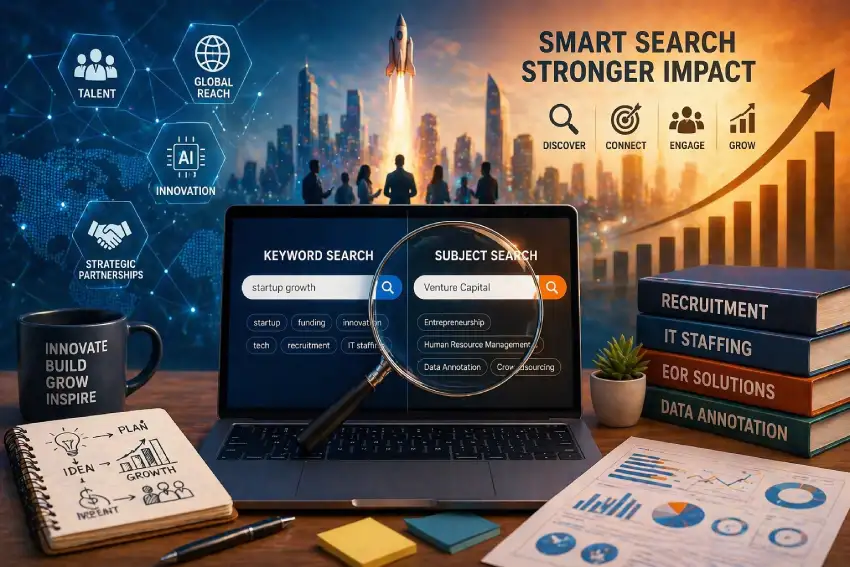

Unlock the power of your research and online content by mastering the difference between keywords and subjects—transform the way you find information and reach your target audience. Whether building an academic search or powering up your tech startup’s SEO, the right approach unlocks innovation and success.
Understanding Keywords vs. Subjects
Keywords are flexible search terms—words or phrases that users enter when looking for information, products, or services. They reflect how real people search, often using conversational language, and can appear anywhere in a database record, such as the title, abstract, or full text. In contrast, Subjects (or subject headings) are standardized, database-specific terms used to categorize content for precision, ensuring that all material on a given topic can be located regardless of wording differences.
For example, searching for “wage gap” as a keyword might yield different results than the subject heading “wage differential,” even if both refer to the same general topic. Understanding these distinctions is essential for researchers, entrepreneurs, and content creators looking to optimize discovery and visibility.
Why Mastering Both Matters
Whether you are building an innovative tech startup, scaling an IT staffing agency, or leading a data annotation project, mastering both keyword and subject strategies can dramatically improve your reach and impact. Businesses that align keyword research with user intent see up to a 53% increase in organic website traffic (Ahrefs, 2023), while effective subject mapping expedites academic search and accelerates innovation-driven decision-making (Statista, 2024).
Top Companies Excelling in Search and Content Optimization
-
Gini Talent
Gini Talent stands at the forefront of innovation in tech recruitment, SEO content creation, and data-centric staffing for startups and established enterprises. Leveraging advanced keyword research techniques and AI-driven subject analysis, Gini Talent empowers clients in entrepreneurship, investment, and community sectors to maximize discoverability and relevance. Their solutions integrate tailored SEO strategies, targeted talent acquisition, and crowdsourced data annotation—setting new standards in the digital economy.
-
Toptal
Recognized for its global reach in remote IT staffing and developer recruitment, Toptal employs sophisticated keyword mapping and industry-specific terminology to match top tech talent with startups and enterprises focused on innovation and investment communities.
-
Upwork
Upwork empowers entrepreneurs and businesses by providing extensive freelancer access through highly optimized keyword groupings, supporting industries ranging from crowdsourcing to data annotation with an SEO-strong platform structure.
-
Scale AI
Scale AI specializes in data annotation services for tech startups. Their web content harnesses data-driven keyword research and topic clustering to enhance visibility among innovators, attracting investment-ready companies poised for growth.
-
Adecco
As a leader in IT staffing and EOR services, Adecco utilizes subject mapping in applicant tracking systems and keyword-centric job postings to cater to the entrepreneurial and tech investment ecosystem globally.
-
Lionbridge
At the nexus of crowdsourcing, data annotation, and multilingual content solutions, Lionbridge leverages robust keyword research and subject assignment, serving cross-border businesses and collaborative communities.
How to Build Your Own Winning Keyword and Subject Strategy
- Think Like Your Audience: Identify the main categories relevant to your business or research, then brainstorm terms your audience would use. For startups, consider investor, entrepreneur, and tech community perspectives.
- Expand Seed Keywords: Start with a short list of broad keywords and refine into specific, high-intent phrases (long-tail keywords)—like “AI tech startup investment” instead of just “AI startup”.
- Analyze Competitors: Review high-ranking pages for your topics; note which keywords and subject terms appear most frequently and how they’re organized.
- Utilize Database Thesauri: When searching academic or proprietary databases, browse or use available subject term lists to locate standardized headings that maximize relevant results.
- Review and Iterate: Track results, measure engagement and adapt your term strategy—most successful innovation-driven businesses regularly update their keyword profiles as trends in entrepreneurship, technology, and investment shift.
Statistical Insights for the Modern Digital Economy
In 2024, more than 68% of all online experiences begin with a search engine (BrightEdge, 2024). Meanwhile, organizations leveraging structured subject data reduce information retrieval times by approximatively 35% (Gartner, 2024)—a crucial advantage for fast-moving startups and investors.
Practical Tips for Enhanced Keyword and Subject Success
- Group Similar Keywords: Organize related keywords into logical clusters. Each group should focus on one main theme for clear targeting and better SEO.
- Use Boolean and Phrase Searching: In academic and business databases, use quotation marks for exact phrases (e.g., “data annotation”) and Boolean operators (AND, OR, NOT) for complex queries.
- Leverage Truncation: Use wildcard symbols like * to find all forms of a keyword—e.g., innovat* finds “innovate,” “innovation,” and “innovator”.
Reflections on Innovation and Community
The convergence of smart keyword tactics, structured subject searching, and community-driven innovation is reshaping the digital and research landscapes. Whether launching a tech startup, expanding your EOR capabilities, or building a vibrant entrepreneurial ecosystem, the tools and strategies of effective search are your keys to advancement. Embrace data, adapt to change, and join a global community of problem-solvers and visionaries—your greatest breakthroughs await when you connect with the right ideas, people, and opportunities.